
A contract you never signed is not a contract.
A contract you don’t have the option of rejecting is not a contract.
A contract whose terms are decided unilaterally is not a contract.
". . . a republic, if you can keep it."
A contract you never signed is not a contract.
A contract you don’t have the option of rejecting is not a contract.
A contract whose terms are decided unilaterally is not a contract.
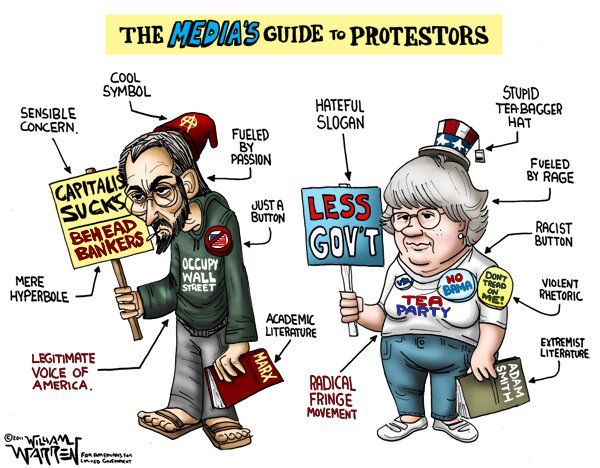
It seems there is a bigger libertarian contingent to the protests than is being acknowledged.
If this man wins the primary, I’m going to have rethink my portfolio. I’d be thrilled to do that.
At 7:40 he announces that as president, he wouldn’t accept a salary higher than the median U.S. income: $39k.

 The unfortunate man could not touch the one he loved
It had been declared illegal by the law
Slowly his fingers became toes and his hands gradually became feet
He began to wear shoes on his hands to disguise his pain
It never occurs to him to break the law. 
Western security agencies are most likely behind the killing of an Iranian scientist in an operation that underlines the complexities of the conflict over Iran’s nuclear programme, analysts say.
Gunmen shot university lecturer Darioush Rezaie, 35, dead in eastern Teheran on Saturday, the third murder of a scientist since 2009.
One was killed by a car bomb detonated remotely.
Iran’s responses to such incidents looked confused, but in Rezaie’s case it was more muddled as the authorities spoke in strikingly different voices from the start.
London-based analyst Ghanem Nuseibeh, founder of Cornerstone Global Associates, said: “Assassinations will continue to be a tool used in this covert war. While it’s impossible to tell with certainty whether Rezaie was an active nuclear scientist, his death appears to be another episode in that war.
“The Iranian narrative has been confused about Rezaie’s work. This adds credence to the speculation that he has been involved in the nuclear programme.” (Read more)
In a frightening example of how the state is tightening its grip around the free Internet, it has emerged that You Tube is complying with thousands of requests from governments to censor and remove videos that show protests and other examples of citizens simply asserting their rights, while also deleting search terms by government mandate.
The latest example is You Tube’s compliance with a request from the British government to censor footage of the British Constitution Group’s Lawful Rebellion protest, during which they attempted to civilly arrest Judge Michael Peake at Birkenhead county court. (Read more)
While new technologies—the Internet, cell phones, email, Facebook, twitter, blogs—help people communicate and fight the state by shedding light on the state’s practices, the state will of course also try, where it can, to use technology to oppress. As reported in a recent Wall Street Journal article, Stingray phone tracker fueling constitutional clash (discussed in a recent episode of Tech News Today), the feds are using a “little known cellphone-tracking device—a stingray”—to track the the location of cell phone users, even when the phone is not in use. As the WSJ piece explains:
A stingray works by mimicking a cellphone tower, getting a phone to connect to it and measuring signals from the phone. It lets the stingray operator “ping,” or send a signal to, a phone and locate it as long as it is powered on, according to documents reviewed by the Journal. The device has various uses, including helping police locate suspects and aiding search-and-rescue teams in finding people lost in remote areas or buried in rubble after an accident.
This is getting ridiculous. What astounds me most is how many people still watch and trust the mainstream media.

New Zealands Three Strikes Law was Pushed, Bought and Paid for by the US – Wikileaks The slow trickle of leaked diplomatic cables from Wikileaks may not be in the headlines as much as it was when it started, but revelations keep pouring out of the website. Recently, new diplomatic cables published on the site revealed just how, not only influential the US was, but just how much control the US had over the passage of the three strikes law in New Zealand.
If there wasn’t any anti-American sentiment before in New Zealand, there certainly will be for some after new diplomatic cables were published revealing the role the US had in pushing for a three strikes law in New Zealand. The New Zealand’s new three strikes law was the most controversial copyright laws in the country and one of the most controverisal in the world. While the law was being proposed, debate was fierce. The law sparked repeated blackout protests where websites would black out their website logo’s in protest of the law since it is widely seen as a censorship law more than a copyright enforcement law. Last month, in spite of major opposition and protests, New Zealand passed the law anyway to the dismay of the New Zealand population. Now, thanks to Wikileaks, we can see just how far back the United States was pushing New Zealand to pass that law in the first place. (Read more)
‘Skynet’ law comes into effect Downloaders beware – from today you can face serious fines for online piracy.
The Government’s Copyright Amendment Act comes into force today and anyone caught downloading copyrighted content illegally could face fines of up to $15,000 and have their internet cut off.
Internet New Zealand chief executive Vikram Kumar says the law means the person who pays the bill for the account needs to be very aware of who’s using the internet and what they’re using it for. (Read more)
A friend posted this on FB:
In a show of solidarity with Occupy Wall Street, Obama has decided that he will occupy Uganda & Iran (in addition to Afghanistan & Iraq).
More than 25,000 security breaches — an average of about seven per day — have occurred at U.S. airports since November 2001, according to newly released Department of Homeland Security documents.
More than 14,000 were people entering “limited-access” areas by going through airport doors or passageways without permission, or unauthorized people going from airport buildings to planes, according to the documents.
The documents, obtained in advance by USA TODAY, were submitted to a House subcommittee on homeland security Wednesday. The documents don’t provide details about the security breaches or whether any could have led to potential attacks on planes or passengers.
. . . .
In 2006, tests by the TSA showed that security screeners at Los Angeles International Airport and Chicago’s O’Hare International Airport failed to find fake bombs hidden on undercover agents posing as passengers in more than 60% of tests, according to a classified report obtained by USA TODAY.
In 2003, five undercover Department of Homeland Security agents posing as passengers carried weapons undetected through several security checkpoints at Boston’s Logan International Airport.
Documents being introduced at Wednesday’s subcommittee hearing also show:
•6,000 security breaches in which Transportation Security Administration screeners failed to screen, or improperly screened, a passenger or a passenger’s carry-on items.
•2,616 security breaches involving an individual gaining unauthorized access to the “sterile area” at screening checkpoints or an exit lane without submitting to all screening procedures and inspections.
•1,026 incidents when someone gained unauthorized access to a sterile area but was “contained” or “constantly monitored” by airport or security personnel until apprehended.
•1,318 incidents in which someone gained unauthorized access from airport perimeters to aircraft operations or security identification display areas and was under constant surveillance until apprehended. (Read more)