Madame Speaker, I rise to introduce the Free Competition in Currency Act of 2009. Currency, or money, is what allows civilization to flourish. In the absence of money, barter is the name of the game; if the farmer needs shoes, he must trade his eggs and milk to the cobbler and hope that the cobbler needs eggs and milk. Money makes the transaction process far easier. Rather than having to search for someone with reciprocal wants, the farmer can exchange his milk and eggs for an agreed-upon medium of exchange with which he can then purchase shoes.
This medium of exchange should satisfy certain properties: it should be durable, that is to say, it does not wear out easily; it should be portable, that is, easily carried; it should be divisible into units usable for every-day transactions; it should be recognizable and uniform, so that one unit of money has the same properties as every other unit; it should be scarce, in the economic sense, so that the extant supply does not satisfy the wants of everyone demanding it; it should be stable, so that the value of its purchasing power does not fluctuate wildly; and it should be reproducible, so that enough units of money can be created to satisfy the needs of exchange.
Over millennia of human history, gold and silver have been the two metals that have most often satisfied these conditions, survived the market process, and gained the trust of billions of people. Gold and silver are difficult to counterfeit, a property which ensures they will always be accepted in commerce. It is precisely for this reason that gold and silver are anathema to governments. A supply of gold and silver that is limited in supply by nature cannot be inflated, and thus serves as a check on the growth of government. Without the ability to inflate the currency, governments find themselves constrained in their actions, unable to carry on wars of aggression or to appease their overtaxed citizens with bread and circuses.
At this country’s founding, there was no government controlled national currency. While the Constitution established the Congressional power of minting coins, it was not until 1792 that the US Mint was formally established. In the meantime, Americans made do with foreign silver and gold coins. Even after the Mint’s operations got underway, foreign coins continued to circulate within the United States, and did so for several decades.
On the desk in my office I have a sign that says: “Don’t steal – the government hates competition.” Indeed, any power a government arrogates to itself, it is loathe to give back to the people. Just as we have gone from a constitutionally-instituted national defense consisting of a limited army and navy bolstered by militias and letters of marque and reprisal, we have moved from a system of competing currencies to a government-instituted banking cartel that monopolizes the issuance of currency. In order to reintroduce a system of competing currencies, there are three steps that must be taken to produce a legal climate favorable to competition.
The first step consists of eliminating legal tender laws. Article I Section 10 of the Constitution forbids the States from making anything but gold and silver a legal tender in payment of debts. States are not required to enact legal tender laws, but should they choose to, the only acceptable legal tender is gold and silver, the two precious metals that individuals throughout history and across cultures have used as currency. However, there is nothing in the Constitution that grants the Congress the power to enact legal tender laws. We, the Congress, have the power to coin money, regulate the value thereof, and of foreign coin, but not to declare a legal tender. Yet, there is a section of US Code, 31 USC 5103, that purports to establish US coins and currency, including Federal Reserve notes, as legal tender.
Historically, legal tender laws have been used by governments to force their citizens to accept debased and devalued currency. Gresham’s Law describes this phenomenon, which can be summed up in one phrase: bad money drives out good money. An emperor, a king, or a dictator might mint coins with half an ounce of gold and force merchants, under pain of death, to accept them as though they contained one ounce of gold. Each ounce of the king’s gold could now be minted into two coins instead of one, so the king now had twice as much “money” to spend on building castles and raising armies. As these legally overvalued coins circulated, the coins containing the full ounce of gold would be pulled out of circulation and hoarded. We saw this same phenomenon happen in the mid-1960s when the US government began to mint subsidiary coinage out of copper and nickel rather than silver. The copper and nickel coins were legally overvalued, the silver coins undervalued in relation, and silver coins vanished from circulation.
These actions also give rise to the most pernicious effects of inflation. Most of the merchants and peasants who received this devalued currency felt the full effects of inflation, the rise in prices and the lowered standard of living, before they received any of the new currency. By the time they received the new currency, prices had long since doubled, and the new currency they received would give them no benefit.
In the absence of legal tender laws, Gresham’s Law no longer holds. If people are free to reject debased currency, and instead demand sound money, sound money will gradually return to use in society. Merchants would have been free to reject the king’s coin and accept only coins containing full metal weight.
The second step to reestablishing competing currencies is to eliminate laws that prohibit the operation of private mints. One private enterprise which attempted to popularize the use of precious metal coins was Liberty Services, the creators of the Liberty Dollar. Evidently the government felt threatened, as Liberty Dollars had all their precious metal coins seized by the FBI and Secret Service in November of 2007. Of course, not all of these coins were owned by Liberty Services, as many were held in trust as backing for silver and gold certificates which Liberty Services issued. None of this matters, of course, to the government, which hates competition. The responsibility to protect contracts is of no interest to the government.
The sections of US Code which Liberty Services is accused of violating are erroneously considered to be anti-counterfeiting statutes, when in fact their purpose was to shut down private mints that had been operating in California. California was awash in gold in the aftermath of the 1849 gold rush, yet had no US Mint to mint coinage. There was not enough foreign coinage circulating in California either, so private mints stepped into the breech to provide their own coins. As was to become the case in other industries during the Progressive era, the private mints were eventually accused of circulating debased (substandard) coinage, and with the supposed aim of providing government-sanctioned regulation and a government guarantee of purity, the 1864 Coinage Act was passed, which banned private mints from producing their own coins for circulation as currency.
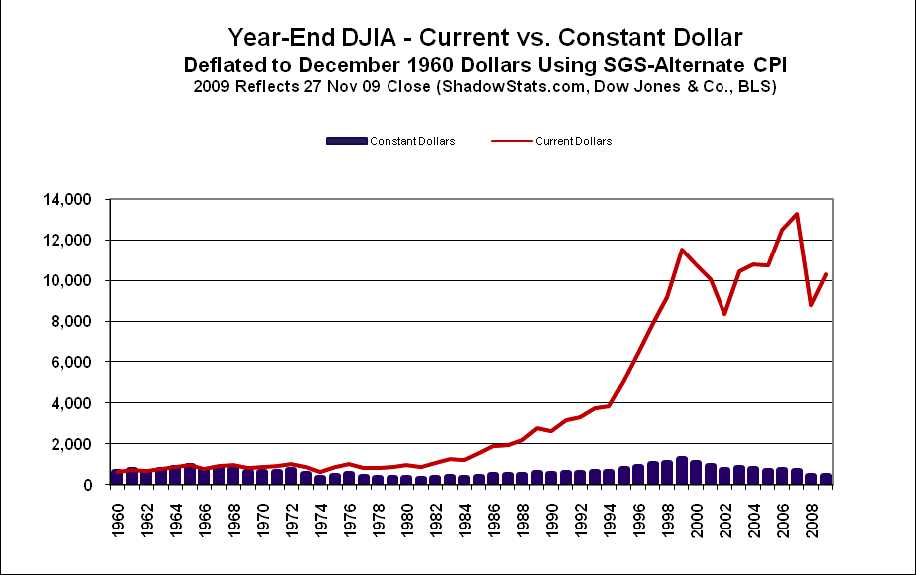
The final step to ensuring competing currencies is to eliminate capital gains and sales taxes on gold and silver coins. Under current federal law, coins are considered collectibles, and are liable for capital gains taxes. Short-term capital gains rates are at income tax levels, up to 35 percent, while long-term capital gains taxes are assessed at the collectibles rate of 28 percent. Furthermore, these taxes actually tax monetary debasement. As the dollar weakens, the nominal dollar value of gold increases. The purchasing power of gold may remain relatively constant, but as the nominal dollar value increases, the federal government considers this an increase in wealth, and taxes accordingly. Thus, the more the dollar is debased, the more capital gains taxes must be paid on holdings of gold and other precious metals.
Just as pernicious are the sales and use taxes which are assessed on gold and silver at the state level in many states. Imagine having to pay sales tax at the bank every time you change a $10 bill for a roll of quarters to do laundry. Inflation is a pernicious tax on the value of money, but even the official numbers, which are massaged downwards, are only on the order of 4% per year. Sales taxes in many states can take away 8% or more on every single transaction in which consumers wish to convert their Federal Reserve Notes into gold or silver.
In conclusion, Madame Speaker, allowing for competing currencies will allow market participants to choose a currency that suits their needs, rather than the needs of the government. The prospect of American citizens turning away from the dollar towards alternate currencies will provide the necessary impetus to the US government to regain control of the dollar and halt its downward spiral. Restoring soundness to the dollar will remove the government’s ability and incentive to inflate the currency, and keep us from launching unconstitutional wars that burden our economy to excess. With a sound currency, everyone is better off, not just those who control the monetary system. I urge my colleagues to consider the redevelopment of a system of competing currencies and cosponsor the Free Competition in Currency Act. (from dailypaul.com)
 To further protect the populace, the federal government has spent upwards of $3billion stockpiling millions of doses of antiviral drugs like Tamiflu—which are being used both to prevent swine flu and to treat those who fall ill.
 (
(