I’m always skeptical that the only people “helped” by these grand government vaccination programs are the medical industrialists who produce the vaccine.
Tag Archives: Healthcare
Study links H1N1 to seasonal flu shot
 A “perplexing” Canadian study linking H1N1 to seasonal flu shots is throwing national influenza plans into disarray and testing public faith in the government agencies responsible for protecting the nation’s health.
Distributed for peer review last week, the study confounded infectious-disease experts in suggesting that people vaccinated against seasonal flu are twice as likely to catch swine flu. (Read more from theglobeandmail.com)
FACT CHECK: Obamacare enforced with tax
Memo to President Barack Obama: It’s a tax. Obama insisted this weekend on national television that requiring people to carry health insurance — and fining them if they don’t — isn’t the same thing as a tax increase. But the language of Democratic bills to revamp the nation’s health care system doesn’t quibble. Both the House bill and the Senate Finance Committee proposal clearly state that the fines would be a tax.
And the reason the fines are in the legislation is to enforce the coverage requirement.
“If you put something in the Internal Revenue Code, and you tell the IRS to collect it, I think that’s a tax,” said Clint Stretch, head of the tax policy group for Deloitte, a major accounting firm. “If you don’t pay, the person who’s going to come and get it is going to be from the IRS.” (Read more from news.yahoo.com)
Federal Government forbids private companies from discussing healthcare
Unbelievable! Expect more crap like this as government takes more control of healthcare.
Outraged that the federal government placed a gag order on healthcare companies concerning cuts in Medicare, Senate Minority Leader Mitch McConnell took to the floor of the Senate to condemn this muzzling of free speech and to demand that the gag order be lifted.
. . . .
We did some research into this inexcusable tactic on the part of the government and discovered that the powerful Senator who directed the Medicare agency to impose the gag order is none other than Senate Finance Committee Chair Max Baucus, D-Montana. (Read more from examiner.com)
16 Arguments against Socialized Healthcare
As expressed by Ron Paul:
1. Assuming a “right” to medical care (or a “right” to be given any good or service for free) contradicts liberty, because government must take from one to provide for another.
2. National healthcare requires an authoritarian government.
3. The idea that quality can be achieved only by government force & taxation is an old economic fallacy.
4. Government monopolies always cause higher costs and lower quality. (ahem, post office)
5. Government does have a roll in sticking up for economic ethics and efficiency. (???)
6. Government should do no harm. Repeal the laws against competition in the medical field.
7. The debasement of our currency contributes to high prices. (Shhh! See no money printing, hear no money printing, think no money printing.)
8. Bureaucrats shouldn’t interfere with doctor-patient relationships.
9. Tax credits are a better way to help the sick.
9 1/2. Tort laws push costs higher.
10. Legalize competition. Let insurance competition across state lines.
11. Legalize competition. Long term insurance policies should be available to young.
12. Insurance should measure risk, not cover all costs. (Car insurance doesn’t cover gas.)
13. The relationship between government and medicine needs to end.
14. Imposing fines on uninsured is a huge boon for insurance companies.
15. Legalize competition. End or ease licensing. The 1910 Flexner Report closed medical schools, eliminated doctors, and tipped the field away from homeopathy.
16. Legalize competition. Remove obstacles to holistic medicine – regulations are pushed by drug companies.
See also:
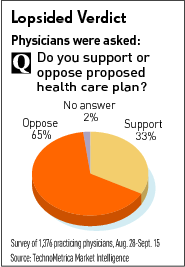
What do doctors say about healthcare?
Gorbachev era Economist on History, Socialism & Healthcare
Dr. Yuri Maltsev was a member of then-President Gorbachev’s perestroika reform team. In this great interview with Radio Free Market, he corrects the generous perception historians have of Gorbachev, illustrates the flaws of Socialism, and speaks at length about the healthcare in America.
Much of the early discussion in this interview traces Dr. Maltsev’s essay (here).
Health care reform means more power for the IRS
There’s been a lot of discussion about the new and powerful federal agencies that would be created by the passage of a national health care bill. The Health Choices Administration, the Health Benefits Advisory Committee, the Health Insurance Exchange — there are dozens in all.
But if the plan envisioned by President Barack Obama and Congressional Democrats is enacted, the primary federal bureaucracy responsible for implementing and enforcing national health care will be an old and familiar one: the Internal Revenue Service. Under the Democrats’ health care proposals, the already powerful — and already feared — IRS would wield even more power and extend its reach even farther into the lives of ordinary Americans, and the presidentially-appointed head of the new health care bureaucracy would have access to confidential IRS information about millions of individual taxpayers.
In short, health care reform, as currently envisioned by Democratic leaders, would be built on the foundation of an expanded and more intrusive IRS.
Under the various proposals now on the table, the IRS would become the main agency for determining who has an “acceptable” health insurance plan; for finding and punishing those who don’t have such a plan; for subsidizing individual health insurance costs through the issuance of a tax credits; and for enforcing the rules on those who attempt to opt out, abuse, or game the system. A substantial portion of H.R. 3200, the House health care bill, is devoted to amending the Internal Revenue Code of 1986 in order to give the IRS the authority to perform these new duties. (Read more from washingtonexaminer.com)
Flashback 1998: Ron Paul on Bill Clinton’s impeachment, unconstitutional wars, terrorism
I think he predicts 9/11.
Ron Paul on Congress, healthcare, Obama in the classroom, and the Fed
USA Today Dietitian Recommends McDonalds, KFC, Taco Bell & Burger King
Visit msnbc.com for Breaking News, World News, and News about the Economy
See also:
Oprah Gives Out Free KFC in Most Hypocritical Move Yet
Ron Paul & Lew Rockewell on Government, Healthcare and Liberty
Firms with Obama ties profit from health push
More change we can believe in.
“President Barack Obama’s push for a national health care overhaul is providing a financial windfall in the election offseason to Democratic consulting firms that are closely connected to the president and two top advisers.
Coalitions of interest groups running at least $24 million in pro-overhaul ads hired GMMB, which worked for Obama’s 2008 campaign and whose partners include a top Obama campaign strategist. They also hired AKPD Message and Media, which was founded by David Axelrod, a top adviser to Obama’s campaign and now to the White House. AKPD did work for Obama’s campaign, and Axelrod’s son Michael and Obama’s campaign manager David Plouffe work there.” (Read more from news.yahoo.com)
Obamacare = massive loss of privacy
“Buried in the 1,017 pages of the House Democrats’ health-care bill is a little-noticed provision that for the first time could give the government access to the checking or credit-card information of every American. Under section 163, which is entitled ‘Administrative Simplification,’ the bill sets new ‘standards’ for electronic transactions between individuals and their health-care providers.
According to section 163, the standards will ‘enable the real-time (or near real-time) determination of an individual’s financial responsibility at the point of service . . . ‘ In addition, they will ‘enable electronic funds transfers, in order to allow automated reconciliation with related health care payment and remittance advice.’
What is envisioned is a ‘machine-readable health plan beneficiary card’ that, in addition to information about a person’s medical history, will contain checking-account or credit-card information, so as to allow electronic payments and, if a person is lucky, occasional remittances. Since under the proposed legislation everyone would be required to have health insurance, all Americans would have to provide this information.” (Read more from nationalreview.com)
What Soviet Medicine Teaches Us
Another fantastic essay by Yuri Maltsev of the Mises Institute:
In 1918, the Soviet Union became the first country to promise universal “cradle-to-grave” healthcare coverage, to be accomplished through the complete socialization of medicine. The “right to health” became a “constitutional right” of Soviet citizens.
The proclaimed advantages of this system were that it would “reduce costs” and eliminate the “waste” that stemmed from “unnecessary duplication and parallelism” — i.e., competition.
These goals were similar to the ones declared by Mr. Obama and Ms. Pelosi — attractive and humane goals of universal coverage and low costs. What’s not to like?
The system had many decades to work, but widespread apathy and low quality of work paralyzed the healthcare system. In the depths of the socialist experiment, healthcare institutions in Russia were at least a hundred years behind the average US level. Moreover, the filth, odors, cats roaming the halls, drunken medical personnel, and absence of soap and cleaning supplies added to an overall impression of hopelessness and frustration that paralyzed the system. According to official Russian estimates, 78 percent of all AIDS victims in Russia contracted the virus through dirty needles or HIV-tainted blood in the state-run hospitals.
Irresponsibility, expressed by the popular Russian saying “They pretend they are paying us and we pretend we are working,” resulted in appalling quality of service, widespread corruption, and extensive loss of life. My friend, a famous neurosurgeon in today’s Russia, received a monthly salary of 150 rubles — one third of the average bus driver’s salary.
In order to receive minimal attention by doctors and nursing personnel, patients had to pay bribes.
. . . .
Not surprisingly, government bureaucrats and Communist Party officials, as early as 1921 (three years after Lenin’s socialization of medicine), realized that the egalitarian system of healthcare was good only for their personal interest as providers, managers, and rationers — but not as private users of the system.
So, as in all countries with socialized medicine, a two-tier system was created: one for the “gray masses” and the other, with a completely different level of service, for the bureaucrats and their intellectual servants. In the USSR, it was often the case that while workers and peasants were dying in the state hospitals, the medicine and equipment that could save their lives was sitting unused in the nomenklatura system.
. . . .
Socialized medical systems have not served to raise general health or living standards anywhere. In fact, both analytical reasoning and empirical evidence point to the opposite conclusion. But the dismal failure of socialized medicine to raise people’s health and longevity has not affected its appeal for politicians, administrators, and their intellectual servants in search of absolute power and total control.
Most countries enslaved by the Soviet empire moved out of a fully socialized system through privatization and insuring competition in the healthcare system. Others, including many European social democracies, intend to privatize the healthcare system in the long run and decentralize medical control. The private ownership of hospitals and other units is seen as a critical determining factor of the new, more efficient, and humane system.
NY Government prevents doctor from providing cheap medical care
“The state is trying to shut down a New York City doctor’s ambitious plan to treat uninsured patients for around $1,000 a year.
Dr. John Muney offers his patients everything from mammograms to mole removal at his AMG Medical Group clinics, which operate in all five boroughs.
‘I’m trying to help uninsured people here,’ he said.
His patients agree to pay $79 a month for a year in return for unlimited office visits with a $10 co-pay.
But his plan landed him in the crosshairs of the state Insurance Department, which ordered him to drop his fixed-rate plan – which it claims is equivalent to an insurance policy.” (Read more from crownheights.info)
As is usually the case government regulation = eliminating competition for big business. Let it not be said that the problems in our healthcare system are the result of free markets. We have not had free markets for a very long time.