Hi, it looks like you’re new. Welcome to Voat!
Voat is a censorship-free community platform where content is submitted, organized, moderated and voted on (ranked) by the users.
Take a tour
18
EPSTEIN, Nicole Junkermann, the Red Cross and the VATICAN connections (pizzagate)
submitted 5 days ago by letsdothis3
This post is a continuation of : The Epstein Associate Nobody’s Talking About: The IDF-Linked Bond Girl Infiltrating the UK NHS….Nicole Junkermann
Nicole Junkermann with husband Ferdinando Brachetti Peretti at the Vatican: www.leggo.it/gossip/news/ferdinando_brachetti_peretti_nicole_jungermann_battesimo_piccola_vita-4369976.html
en.wikipedia.org/wiki/Ferdinando_Brachetti_Peretti
Ferdinando Maria Brachetti Peretti (born in Rome on January 13 1960), from the wealthy Brachetti Peretti family, is Chairman and CEO of an Italian energy company, API Group.
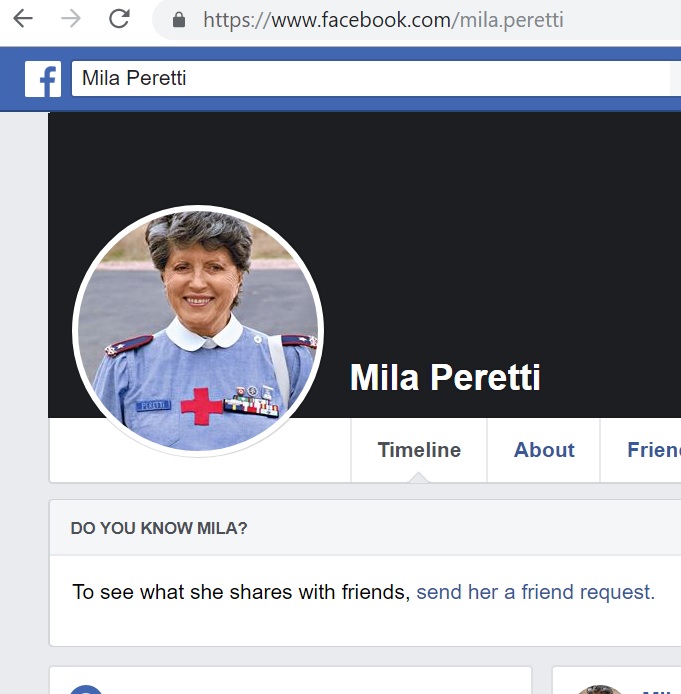
Brachetti Peretti’s father, Count Aldo Maria Brachetti Peretti, was for thirty years, until September 2007, head of the family Group “API” (Anonima Petroli Italiana), founded by his maternal grandfather Cav. Del Lavoro Ferdinando Peretti.[citation needed] His mother, Mila, worked for more than 30 years in the Red Cross and is the only woman in Italy to carry the military grade of General.
Mila Peretti imgur.com/a/uhI8k1Z
Through social media one can see the deep ties to the Vatican… I’m archiving those connections.. Anyhoo..
Red Cross and Vatican helped thousands of Nazis to escape – www.theguardian.com/world/2011/may/25/nazis-escaped-on-red-cross-documents
Her son Ugo and brother-in-law of Junkermann: en.wikipedia.org/wiki/Ugo_Brachetti_Peretti
Ugo Maria Brachetti Peretti (born July 8, 1965, Rome) is an Italian oil executive. ..His father, Count Aldo Maria Brachetti Peretti, Cavaliere Del Lavoro was the head of the family group, Anonima Petroli Italiana (API) for thirty years, until his retirement in September 2007. The company was founded by his maternal grandfather Cavaliere Del Lavoro Ferdinando Peretti. His mother, Mila Peretti,[1] is the National Inspectress of the Italian Red Cross, which she has served for over 30 years. She is the only woman in Italy to carry the military grade of General. In 2005 Peretti married the Countess Isabella Borromeo Arese Taverna.
He was educated at the American Community School in London where he graduated in 1983 with an international Baccalaureate degree and then qualified for a degree in Business Administration at the American University of Rome in 1987. He subsequently obtained his specialization at Boston University. He completed his military service as an officer of the Carabinieri.
After 1990 he started working as a manager in the family business of which he and his brothers are 100% shareholders. During his time with API he has held many positions, at first operating the “downstream cycle” (a combination of activities such as deliveries, transportation, refining, sale and marketing of oil). In 2007, after a series of promotions, he became Chairman of the company.[2] In this capacity, he focused the Group’s activities back to the oil sector, with the strengthening of the distribution network and the improvement of the Falconara refinery.[3] He holds several other chairs, vice-chairs and advisory positions within API as well as being a member of the boards at UniCredit, the Executive Council of the “Rome Industrial Union” and Unione Petrolifera.
Corps of Gendarmerie of Vatican City en.wikipedia.org/wiki/Corps_of_Gendarmerie_of_Vatican_City
The Gendarmerie Corps of Vatican City State (Italian: Corpo della Gendarmeria dello Stato della Città del Vaticano) is the gendarmerie, or police and security force, of Vatican City and the extraterritorial properties of the Holy See.
In 1816, after the dissolution of the Napoleonic empire, Pope Pius VII founded the Papal Carabinieri Corps for the service of the Papal States.
Ugo is married to Isabella Borromeo Arese Taverna ..her half-sister is Beatrice en.wikipedia.org/wiki/Beatrice_Borromeo
Beatrice dei Principi Borromeo Arese Taverna (born 18 August 1985 in San Candido)[5] is a member of the ancient aristocratic House of Borromeo, and she is well known in the Italian news media as a television personality. She is the wife of Pierre Casiraghi, younger son of Caroline, Princess of Hanover…
Through her father she is related to Carlo Borromeo (1538–1584), who became a cardinal of the Roman Catholic Church, Archbishop of Milan, and a canonized saint. The family currently owns most of the Borromean Islands in the Lago Maggiore, Milan city, and many other estates in the Lombardy and Piedmont countryside .
House of Borromeo en.wikipedia.org/wiki/House_of_Borromeo
The best-known members of the family were the cardinals and Archbishops of Milan; Carlo (1538–1584), who was canonized by Pope Paul V in 1610, and Federico (1564–1631), who founded the Ambrosian Library. The figure of the Borromean rings, which forms part of the family’s coat of arms, is well known in the diverse fields of topology, psychoanalysis and theology.
I’ll stop there for now. But y’all have heard about the thousands of bones found buried in the Vatican City, right? Wonder what that’s all about. Story here:
Thousands of bones found in Vatican search for missing teen
9 comments
want to join the discussion? login or register in seconds.
sort by: New Bottom Intensity Old
Sort: Top
[–] Vindicator 2 points (+2|-0) 5 days ago
@letsdothis3, I notice the Borromeo coat of arms has a snake eating a child in the upper left. That is apparently the emblem of the House of Visconti of Milan which supposedly died out.
Sketchy.
link
[–] Piscina 2 points (+2|-0) 5 days ago
This is Peretti being interviewed about his ‘art’, which features dead animals, butchered carcasses, horns and a final shot of him showing only one eye.
link
[–] letsdothis3 [S] 2 points (+2|-0) 5 days ago
Good find. Grim ‘art’.
link parent
[–] letsdothis3 [S] 1 point (+1|-0) 5 days ago (edited 5 days ago)
Borromean Rings – The Holy Trinity www.holytrinityamblecote.org.uk/symbols.html
Borromean Rings According to the Athanasian Creed we worship one God in Trinity, and Trinity in unity and so Borromean rings have been used to represent this idea. An association can be traced back to Saint Augustin of Hippo (354-430). He described how three gold rings could be three rings but of one substance. A now lost 13th century French manuscript described the word “unitas” at the intersection of all rings and the three syllables of “tri-ni-tas” distributed in the outer sectors.
im-possible.info/english/articles/borromeo/index.html
In mathematics, the Borromean rings consist of three topological circles which are linked and form a Brunnian link, i.e., removing any ring results in two unlinked rings…
Borromean link was known long before Vitaliano Borromeo by vikings of Scandinavia. The symbol known as ‘Odin’s triangle’ or the ‘Walknot’ (meaning knot of the slain) has two variants. One is a set of Borromean triangles, the other is a unicursal curve that forms a trefoil knot. The two designs are clearly closely related…
Today Borromean rings can be met many logotypes. The most known is logo of Ballantine beer. In North America, the Borromean rings is known as the Ballantine rings after the New Jersey Brewing company P. Ballantine and Sons.
en.wikipedia.org/wiki/P._Ballantine_and_Sons_Brewing_Company
Writer/journalist Hunter S. Thompson mentions drinking Ballantine Ale twice in his novel Fear and Loathing in Las Vegas. At the beginning of Chapter 12, Thompson writes “Into the Ballantine Ale now, zombie drunk and nervous.” Later in Chapter 12, Thompson writes “‘Ballantine Ale,’ I said … a very mystic long shot, unknown between Newark and San Francisco. He served it up, ice-cold. I relaxed. Suddenly everything was going right; I was finally getting the breaks.”[18] It is worth noting that Thompson’s book was based on a trip he took with his attorney in March and April 1971, approximately one year before Ballantine sold to Falstaff.
The iconic American writer Ernest Hemingway endorsed Ballantine Ale in a print advertisement.[19][20] This ad was part of a larger campaign featuring authors and novelists, asking them “How would you put a glass of Ballantine Ale into words?” Hemingway was the most prominent writer to participate followed by John Steinbeck. Other writers who were in the campaign include:
James A. Michener, author of over 40 books, who is best known for Tales of the South Pacific for which he won the Pulitzer Prize for Fiction in 1948.
C.S. Forester, who is best known for writing the Horatio Hornblower series, which was later turned into a TV series. Erle Stanley Gardner, who is best known for his Perry Mason detective novels, which were also turned into a TV series.
Anita Loos, who wrote Gentlemen Prefer Blondes, which was adapted into a popular movie starring Marilyn Monroe. Lesser known writers who participated include: J.B. Priestley, A.J. Cronin, Paul Gallico, James Hilton, and Clarence Budington Kelland. Ballantine’s Beer is referred to as “expensive imported beer” in Sara Sheridan’s Brighton Belle, a mystery set on the South Coast in England in the 1950s.[21]
In politics – In 1983, President Ronald Reagan famously held up a pint of Ballantine Ale draft at a local bar in Boston.[26][27][28][29] President Harry S. Truman was the recipient of a bottle of the prestigious and highly regarded Burton Ale..
Jay-Z also mentions Ballantine Ale in his 2010 interview with Charlie Rose….n the album art for Led Zeppelin’s fourth album, each band member chose a symbol to represent himself. It is rumored that drummer John Bonham’s choice to use the Borromean rings was inspired by Ballantine’s logo.[9] Bonham’s symbol was of course “upside down” in comparison.
link
[–] letsdothis3 [S] 1 point (+1|-0) 5 days ago (edited 5 days ago)
www.specchioeconomico.com/200712/brachetti.html (translated from Italian)
Ferdinando Brachetti Peretti is managing director of api holding, president of api energia and api nòva energia spa. api is written with the initials strictly in lowercase and with the horse logo, operating for about 80 years in the oil and energy sector and family safe. One day before this affirmation Jim Rogers, founder with George Soros of the Quantum Fund, a fund famous in the world of finance for double-digit returns, had predicted a rising price up to $ 150 a barrel for oil; and Paolo Scaroni, CEO of ENI, had assessed the world reserves sufficient for another 70 years. Meanwhile, between the stock exchanges of London and New York there was a surge in prices for companies operating in the photovoltaic sector, along with an unmotivated loss for those operating in the wind farm. An energy world, therefore, in full turbulence. At the Rome Fair, where the World Energy Congress was taking place, Ferdinando Brachetti Peretti looked to the future of the companies entrusted to him and planned new developments. Representatives of Iberdrola, a Spanish company operating in all energy sectors, awaited him.
…Great commitment to work, confidentiality, mutual respect of people and roles in the company and in the parental group are in the family tradition. The founder of today, the knight of Labor Aldo Brachetti, at the time of his marriage with Mila Peretti wanted to unite, to his own, the surname of his father-in-law, founder of the company, starting the lineage of Brachetti Peretti. No interviews, very few public appearances, no gossip, despite being related to important names of Italian high society. Ferdinando is married to SAR Mafalda d’Assia, nephew of the princess Mafalda di Savoia, second child of Vittorio Emanuele III and wife of Filippo d’Assia.
Ferdinando’s brother, Ugo, who heads the oil sector, refining, marketing and distribution, married Isabella Borromeo of the princes of Angera, elder sister of Lavinia Borromeo, wife of John Elkann, heir of Fiat. 47 years old, tall, thin, Ferdinando starts the day early in the morning. Exercise bikes in the home gym, at 7.00 race in the avenues of Villa Borghese, then at work to take care of the oil holding and the two electricity companies entrusted to his particular care. After the classical high school, enrollment in the Faculty of Economics and Commerce, the move to London for two years, the start of the oil trading office. Then to Paris, to follow administration and finance at the Paribas Bank.
At the same time he practiced various sports, he was an Italian helicopter pilot champion, he participated in motorbike competitions, he was an officer of the Carabinieri in the 1980s and 1981, earning the solemn commendation from the Head of State Sandro Pertini on the occasion of the earthquake of the ‘Irpinia. This has been the case for 25 years, during which he first followed all the sectors of the Group managing the “downstream” cycle which he considers one of the most alive and interesting, that is the set of activities from the supply of crude oil to transport on ships, to refining, marketing, selling oil and its derivatives, as well as green gasoline, diesel, lubricants, LPG in cylinders, turpentine, sulfur soap, up to the asphalt with the latest product of the non-stick bitumen from the Alma refinery of Ravenna,..
link
[–] derram 1 point (+1|-0) 5 days ago
files.catbox.moe/o1bggp.jpg :
files.catbox.moe/y86xk3.png :
Red Cross and Vatican helped thousands of Nazis to escape | World news | The Guardian
This has been an automated message.
link
[–] shewhomustbeobeyed 4 days ago
leggo – archive.is/yp1Zi
wiki – archive.is/agrru and archive.is/Elvv0 and archive.is/bAADm and archive.is/hP98J and archive.is/c33Xf and archive.is/XG6n6 and archive.is/u1TNJ and archive.is/V0JF7 and archive.is/E3FZf
images – archive.is/68Aqx and archive.is/xlBvv
theguardian – archive.is/tDxM8
rt – archive.is/TkS2O
specchioeconomico – archive.is/LmcW6
ewetoob – www.invidio.us/watch?v=grDgMBz6h90
holytrinityamblecote – archive.is/Y2us9
im-possible – archive.is/kupOC
link parent
[–] carmencita 4 days ago
Not good at copying links from my phone but I did a couple of posts on the bones of a girl being found on the grounds of the Vatican. Jodi my personal opinion but the pope is covering up for crimes committed by priests and other holy officials that have murdered children there. Her brother is tirelessly pursuing truth and justice still.
link
[–] Vindicator 5 days ago
I’ll stop there for now. But y’all have heard about the thousands of bones found buried in the Vatican City, right? Wonder what that’s all about.
It’s somewhat suspect that the media is reporting bones under the Vatican as some strange and suspicious discovery. In Roman times, Vatican Hill was the site of a necropolis outside the walls of Rome (an above ground cemetery). Peter, the first pope, was interred there after his crucifixion by Nero in AD 67. It was not originally the site of a church, though Christians did gather there and at the graves of other early matyrs like Saint Sebastian to pray for their martyred heroes.
Vatican Hill didn’t become the site of a church until over two centuries later, when Roman Emperor Constantine converted to Catholicism and made it the religion of the Roman Empire. He decided to build the first St. Peter’s Basilica over the grave of the original Keeper of the Keys, which involved partially leveling Vatican Hill to fill the necropolis so the church could be built on top. Wikipedia has a pretty good article on the topic, which includes diagrams showing the construction. Their entry on the Tomb of St. Peter says
Between 320 and 327, Constantine built a five-aisled basilica atop the early Christian necropolis that was purported to be Peter’s resting place.[17] Much of the Vatican Hill was leveled to provide a firm foundation for the first St. Peter’s Basilica. The altar of the Basilica was planned to be located directly over the tomb. The matter was complicated by the upper chamber or memoria above the vault. This upper chamber had become endeared to the Romans during the ages of persecution, and they were unwilling that it should be destroyed.[16] The memoria was turned into the Chapel of the Confession. Above that was the main floor of the Basilica, with the raised altar directly over the Chapel of the Confession.
Following the discovery of bones that had been transferred from a second tomb under the monument, on June 26, 1968, Pope Paul VI claimed that the relics of Saint Peter had been identified in a manner considered convincing.[3]
The grave claimed by the Church to be that of Saint Peter lies at the foot of the aedicula beneath the floor. The remains of four individuals and several farm animals were found in this grave.[4] In 1953, after the initial archeological efforts had been completed, another set of bones were found that were said to have been removed without the archeologists’ knowledge from a niche (loculus) in the north side of a wall (the graffiti wall) that abuts the red wall on the right of the aedicula. Subsequent testing indicated that these were the bones of a 60- to 70-year-old man.[5] Margherita Guarducci argued that these were the remains of Saint Peter and that they had been moved into a niche in the graffiti wall from the grave under the aedicula “at the time of Constantine, after the peace of the church” (313).[6]
There are literally thousands of bones under the Vatican from Roman times. More are uncovered every time any major construction is undertaken.
link